
The 2024 U.S. Election:
What’s Next for America?

Trump is President, what now?
With Donald Trump reclaiming the presidency in 2024, a whole new world of finance and business stood with wide eyes to see what this new administration did to craft and shape policies for the next four years. Trump promises a new boost of economic growth, deregulation, and a "pro-America" trade agenda. Investors are now eyeing how such positions could stir up financial markets, the dollar's value, and industries from manufacturing to technology, while wondering whether tax policy might change significantly.
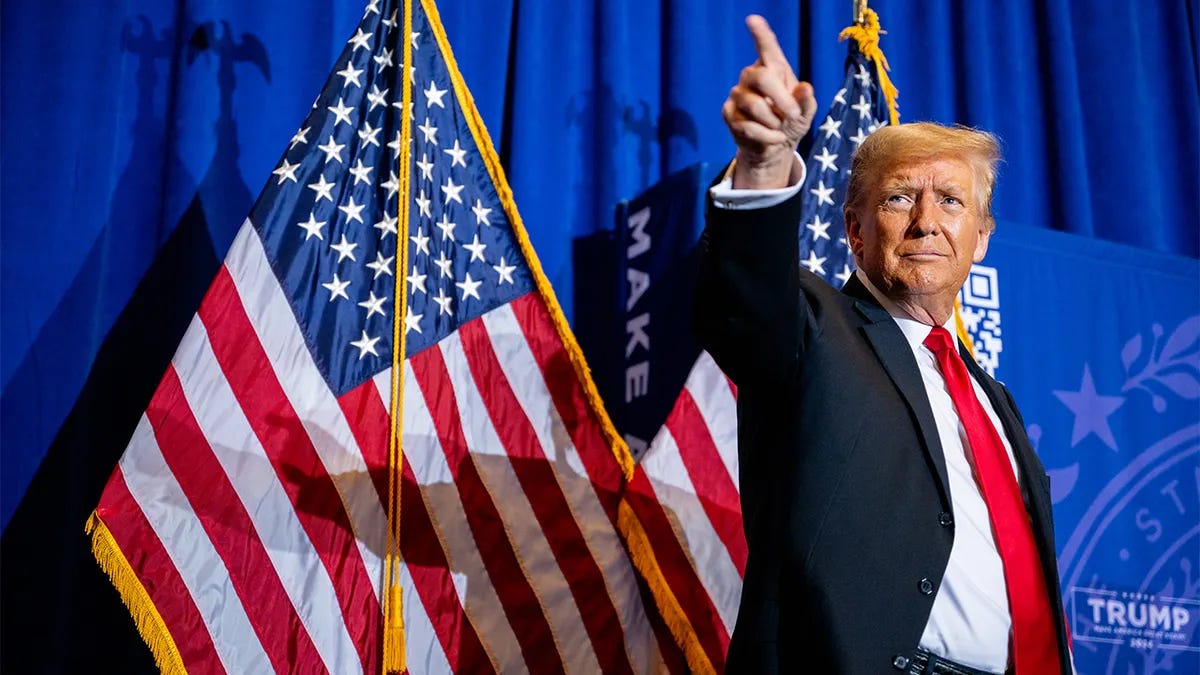
What did the Polls say?
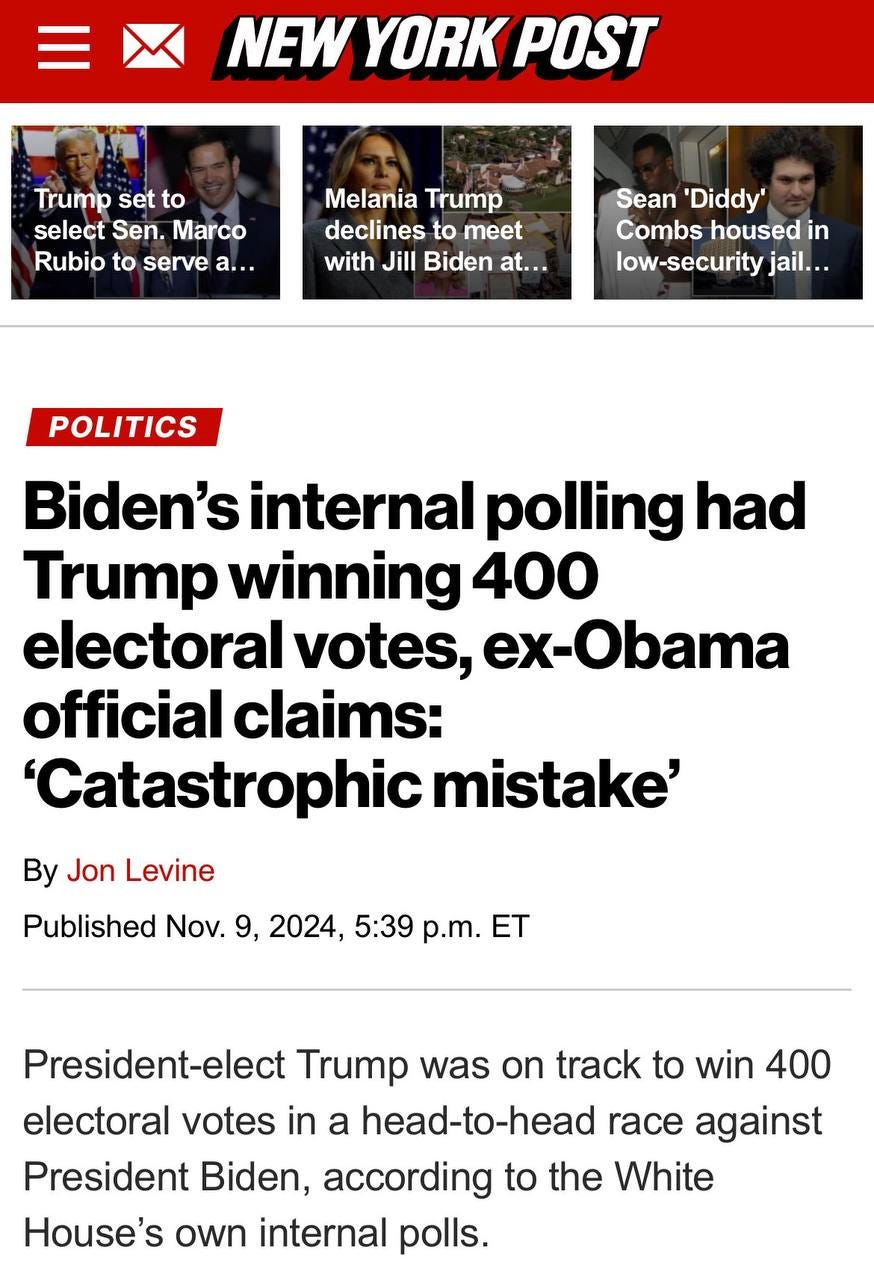
Firstly, the Polls had suggested a tight race, with Trump and his Democratic opponent locked in a near-even split of voter intentions. Despite high anticipation around early polling data, Trump's support was reliably strong in rural and suburban areas-a possible echo of the "silent majority" that helped carry him to victory in 2016, and also now in 2024. Evidently, Trump could have won even with a higher score. This was according to Biden's internal polling, which had Trump winning 400 electoral votes.
The Results:
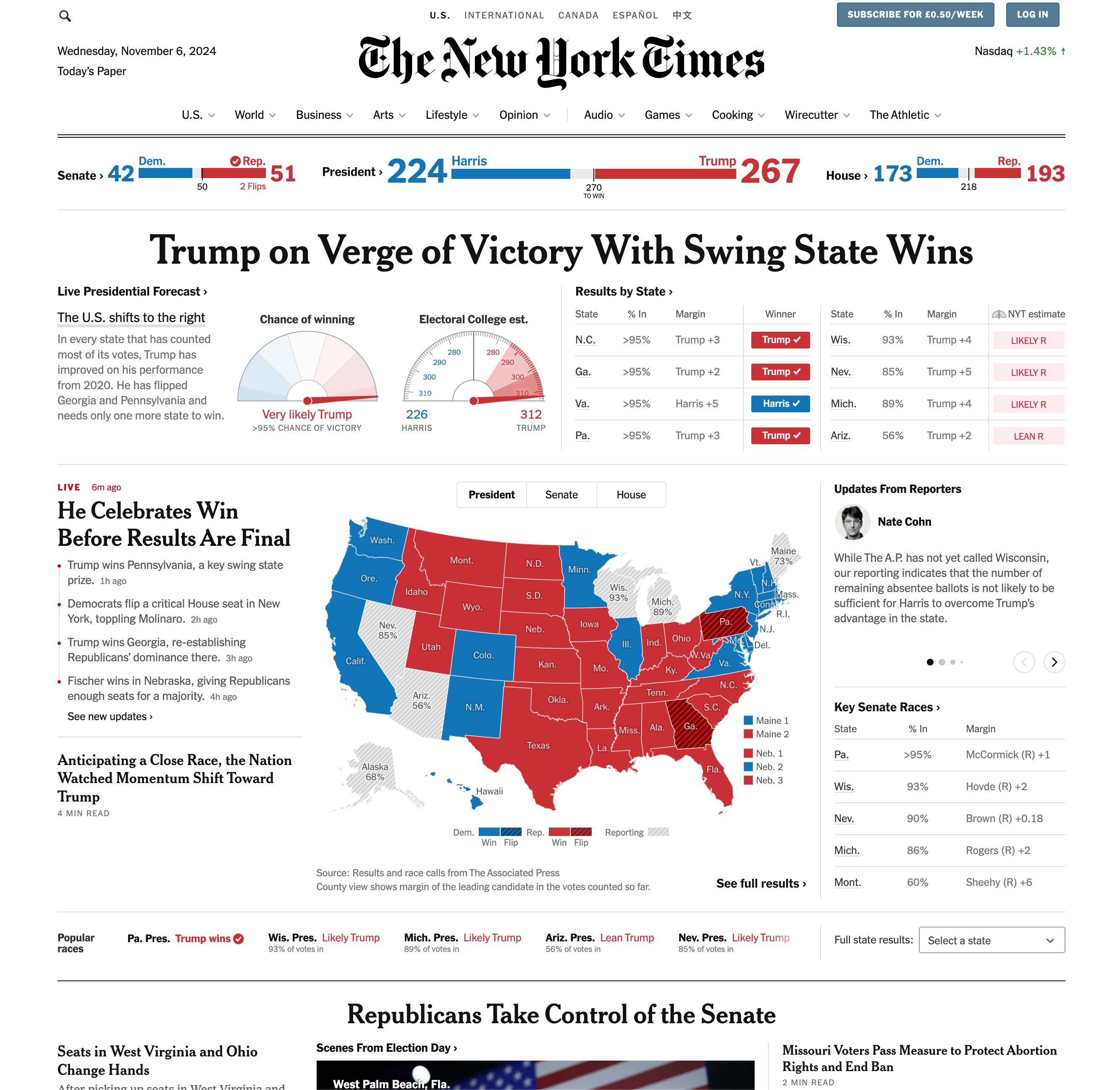
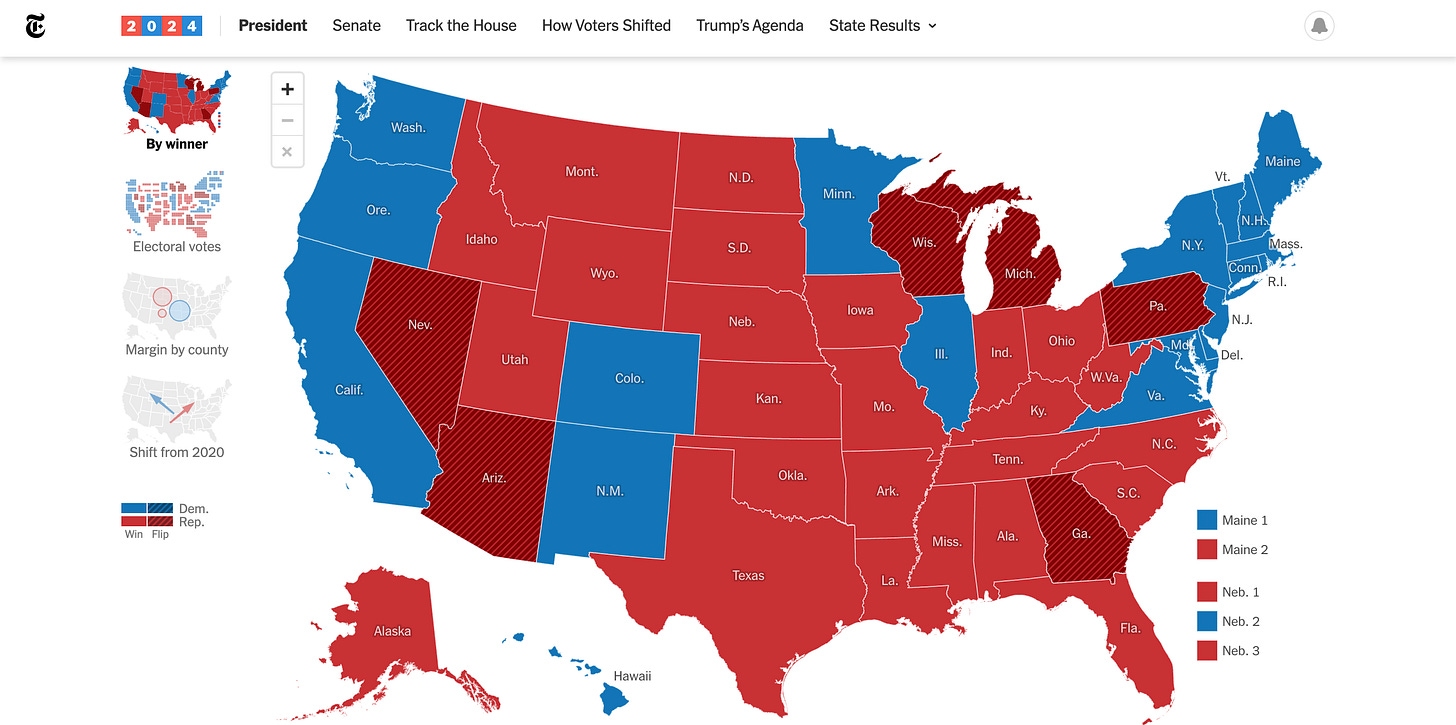
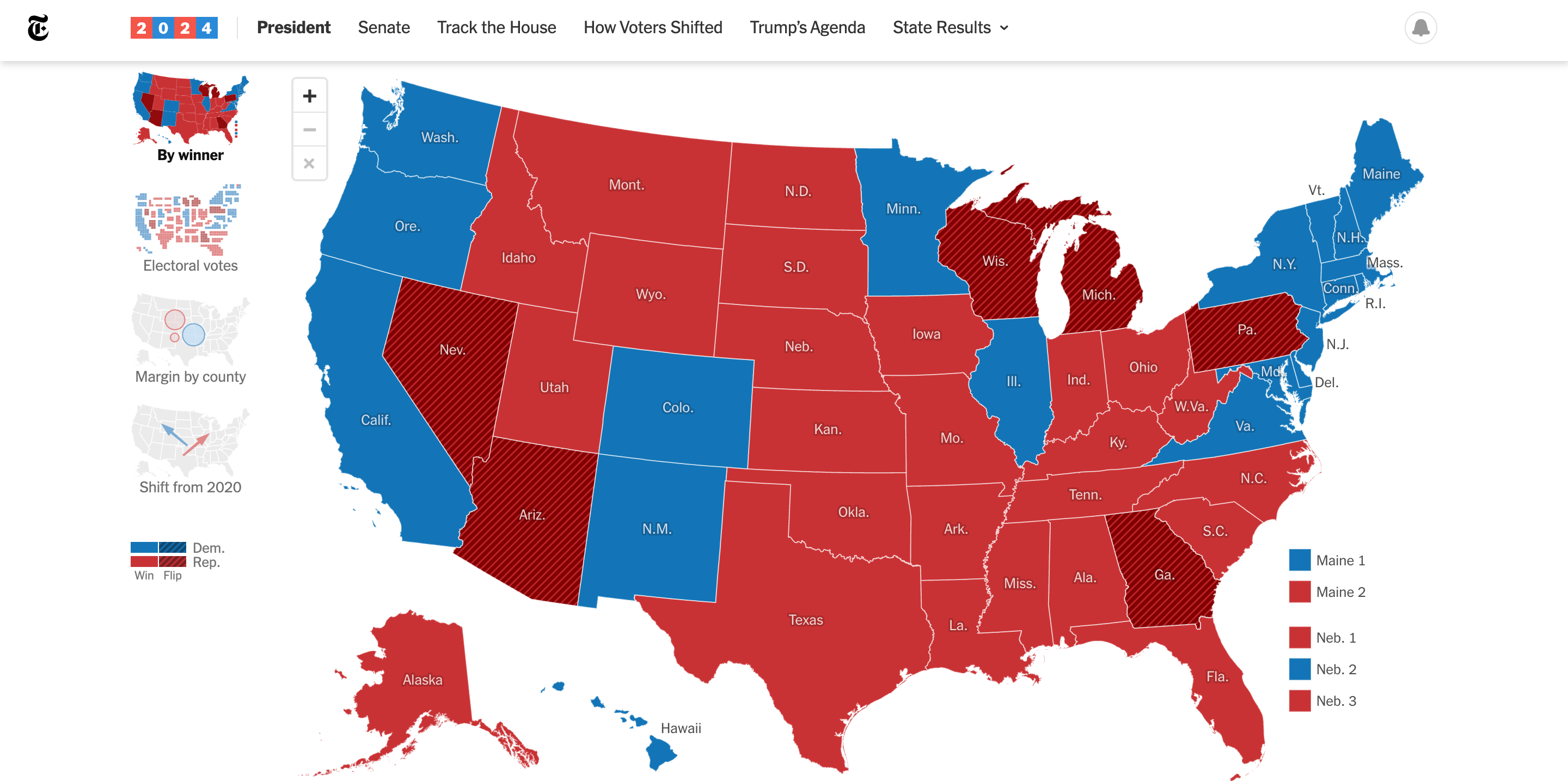
President; Trump returns to the White House, indicating an administration that pushes for changes in finance and how America relates with businesses within. He clearly won the election with a landslide win of 312 electoral votes, to 226 electoral votes. This is even a bigger win than he had against Hillary Clinton, in 2016. When you compare it to the 2020 election, the blue wall, which consists of the states like Pennsylvania, Wisconsin, Michigan, Georgia, Arizona, and Nevada, clearly flipped to his advantage, gaining trust back from the voters. It is just showing a clear and strong message; The people wanted him back in office!
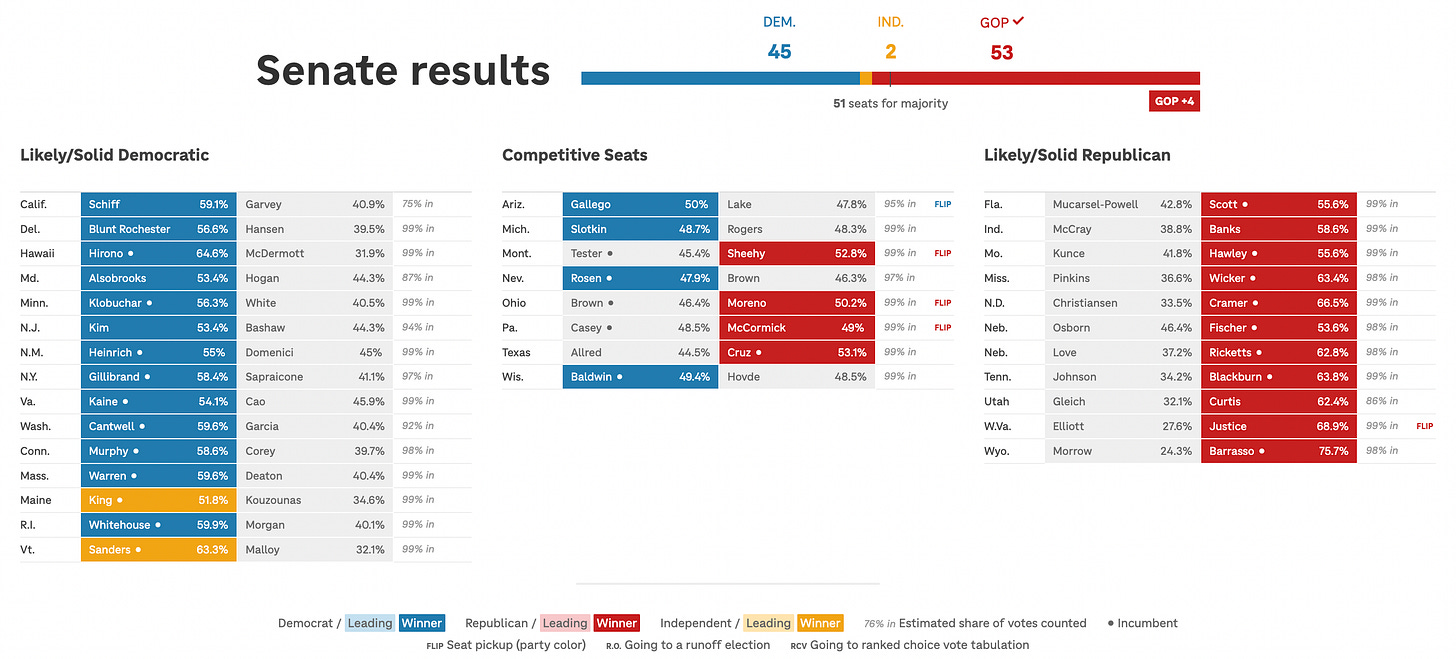
Senate; The Republican Party won the majority with 53 seats in the Senate, flipping 4 seats from the last major election. The Democratic Party lost seats, losing 4 seats in the Senate, making it only 45 seats plus 2 extra seats from two Independent Party. With the Republicans also gaining power in the Senate, they are now securing a major majority. This control in the Senate is expected to ease the passage of certain policies, laws, and will provide an advantage in judicial appointments.
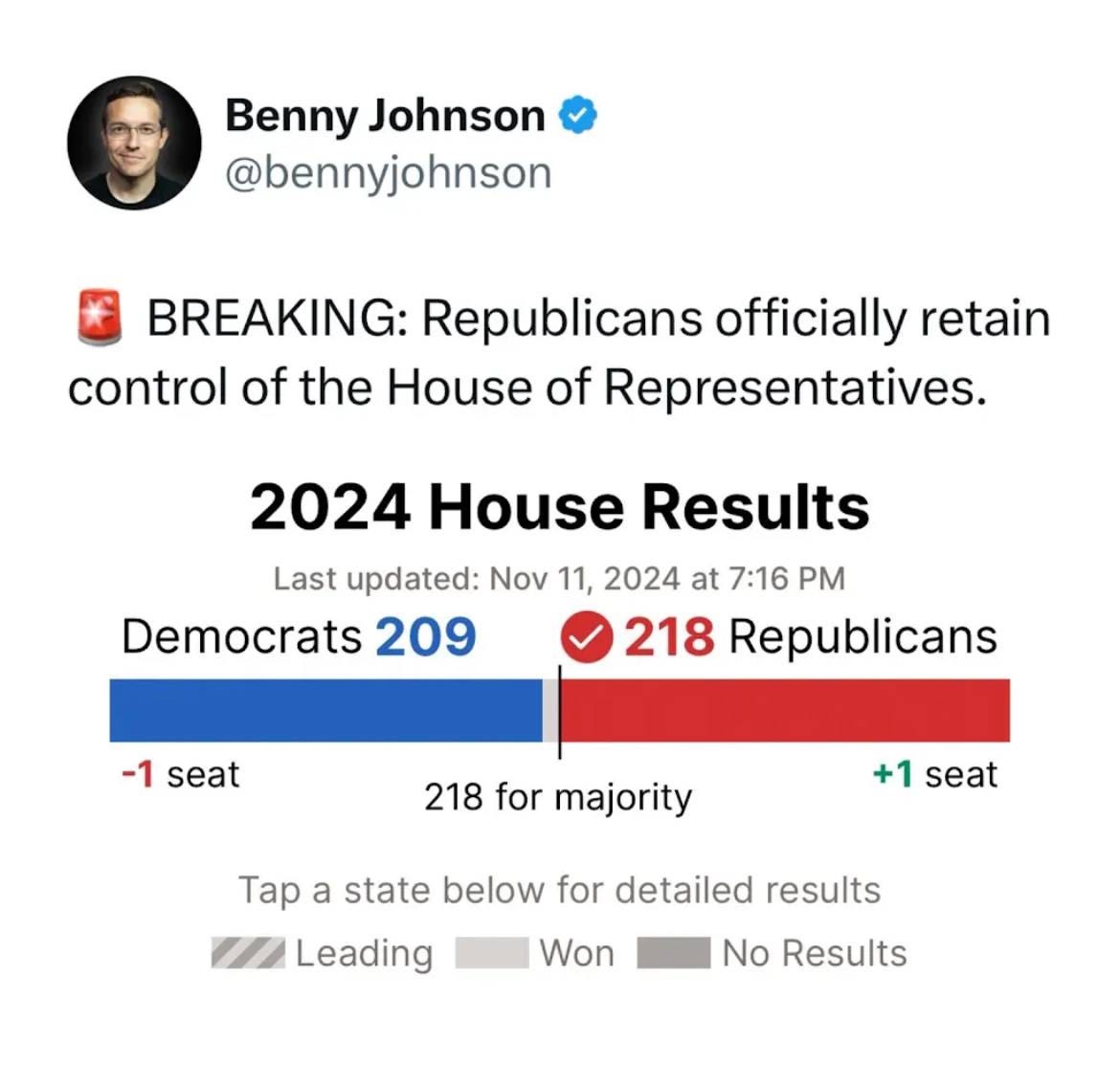
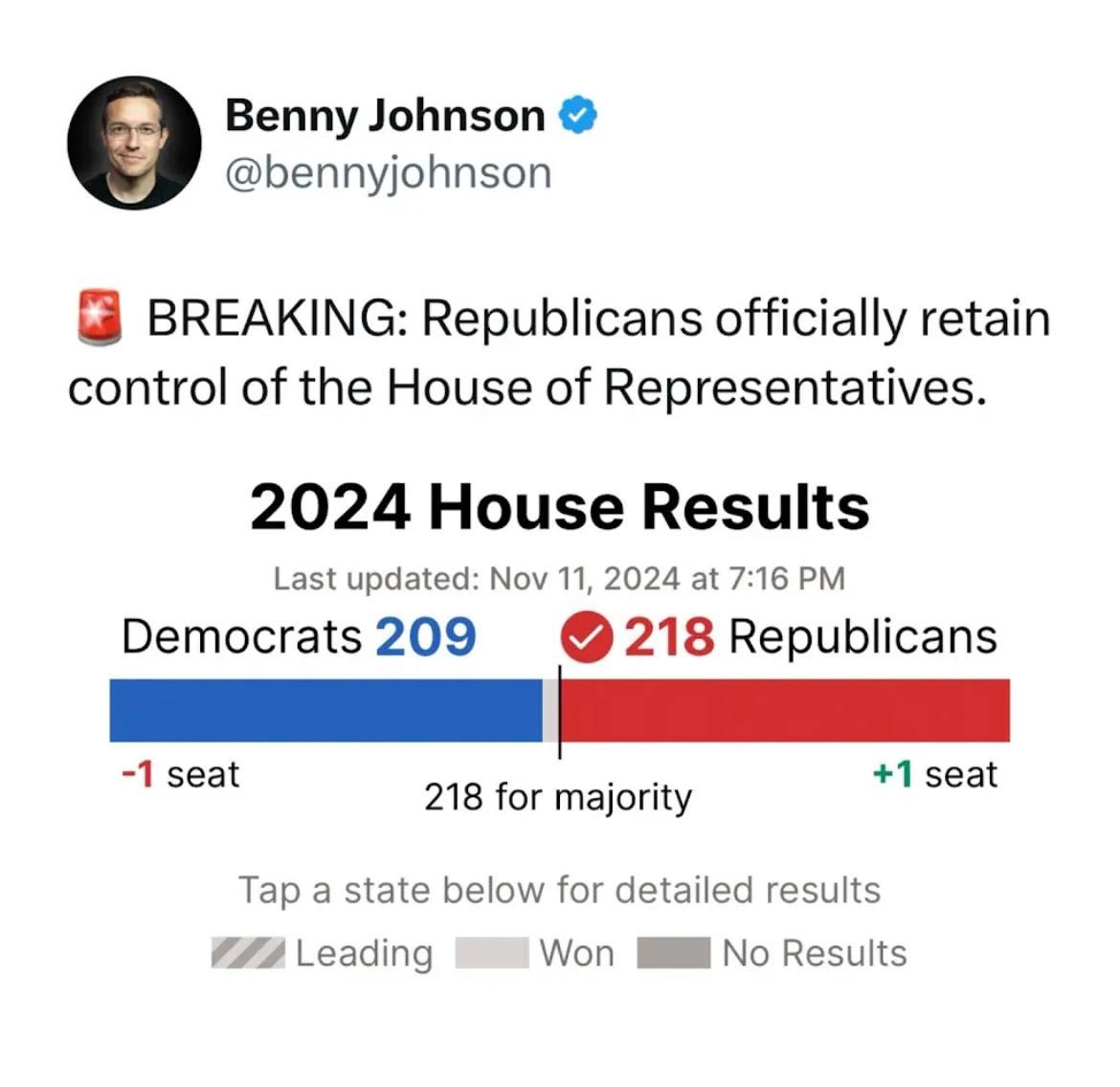
House; Also the House is now under Republican control, which is important for Trump and its Administration. With now the majority in the Senate and House, he and the Republican Party can push and implement their agenda more easily. The Republican also won the House by a Landslide, just like the Presidency and the Senate.
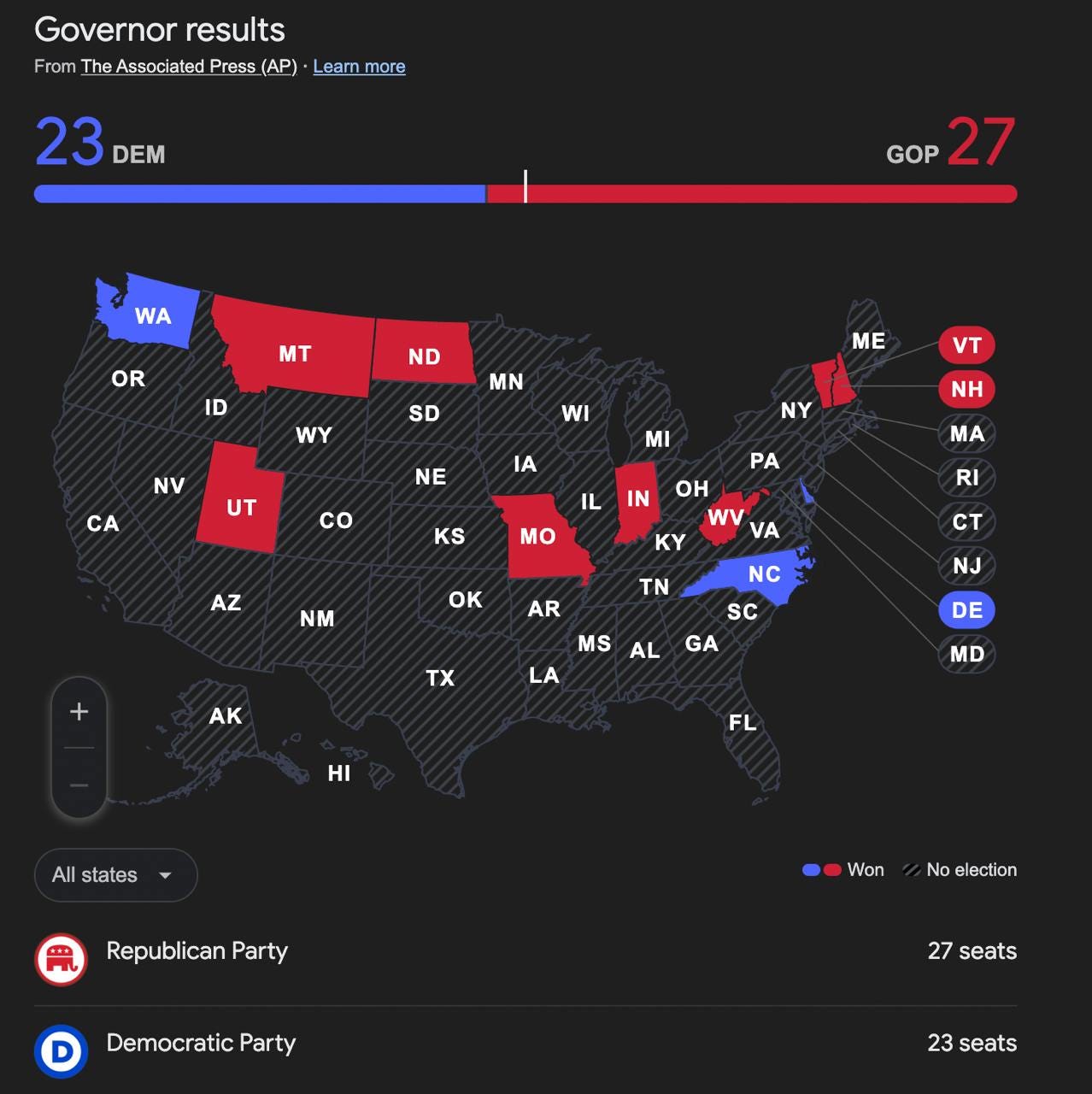
Governor; For the Governors, the Republican Party candidates won most key races, solidifying state-level control in swing states. With 27 to 23, the Republican Party also takes control of the Governor positions.
How did the votes shift?
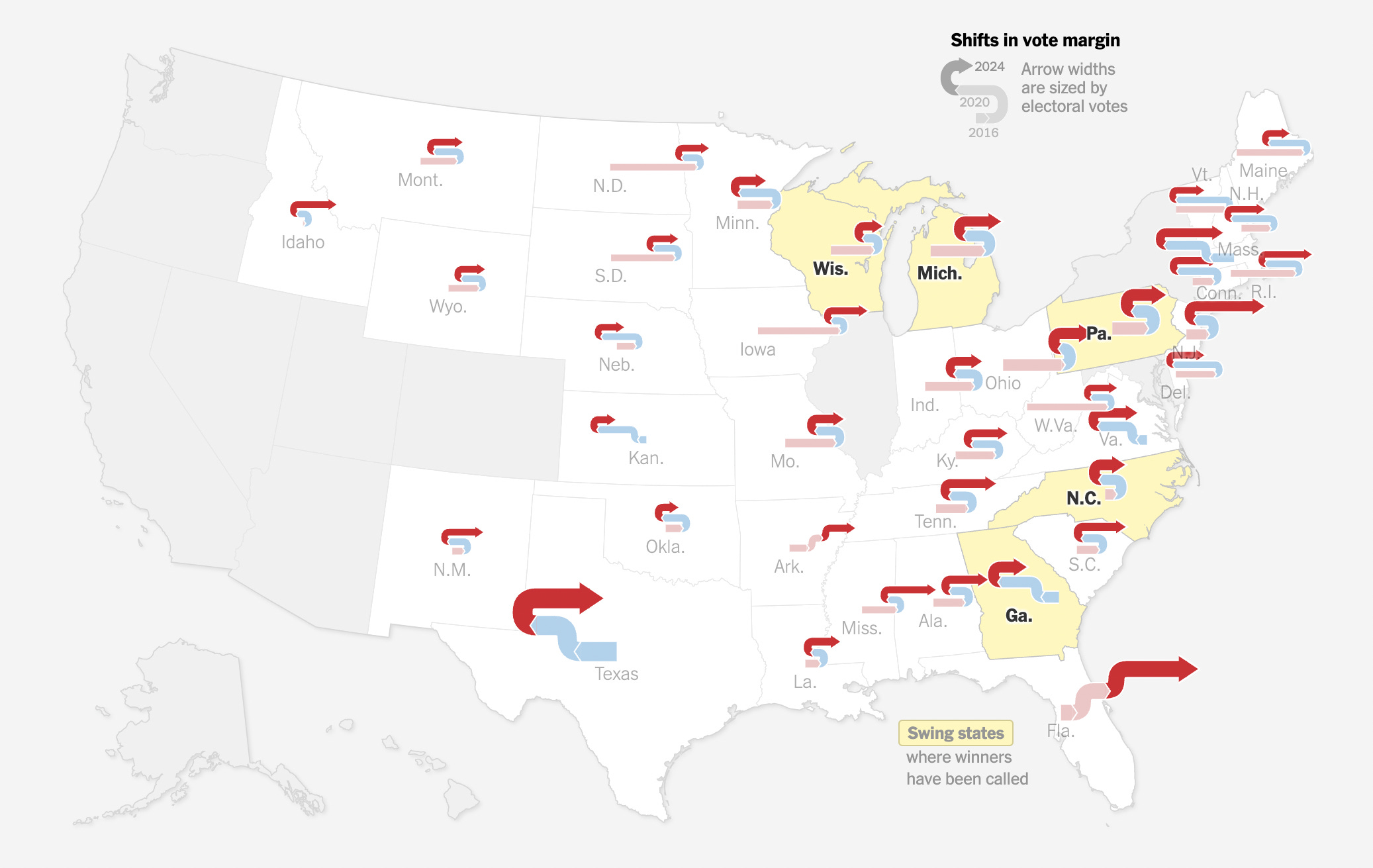
This election saw notable shifts in traditional voting patterns. Areas previously viewed as "solid blue" saw decreases in Democratic support, particularly in suburban and exurban counties. The rural-urban divide is more pronounced than ever, with Trump securing a significant base outside metropolitan hubs. Especially, many young men voted for Trump, including many Latinos and men from the Black community. According to BBC, also 64% of the Native Americans and the Amish voted for Trump in the 2024 presidential election. This for a person like Trump, who had to hear quite the banter all the time, is a pretty big deal!
There are no blue states, only blue cities?
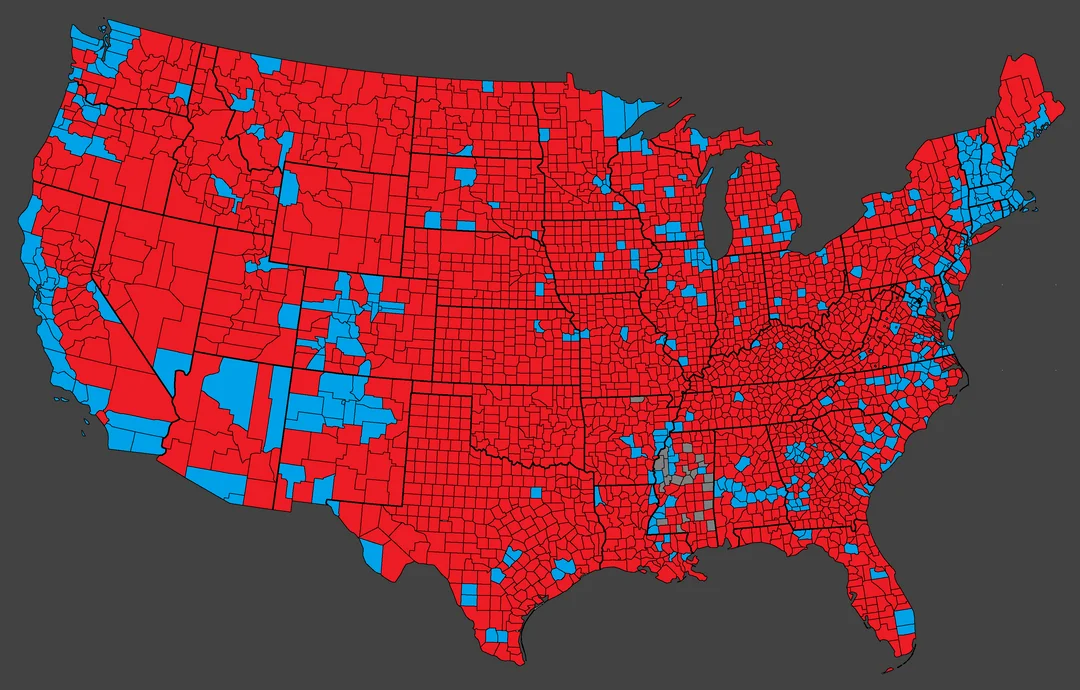
In states formerly considered to be Democratic strongholds, such as California and New York, Trump swept most rural areas and many suburban ones. The story of "blue states" is overtaken by a more accurate dynamic: "blue cities." Financial and cultural centers such as New York City, Los Angeles, and Chicago remain Democratic strongholds, while most rural and suburban areas lean heavily Republican. It is a divide that increasingly is going to spill over into policy decisions involving infrastructure, federal funding, and education, among many areas, with a full-throated assist in the economic empowerment of rural areas.
Issues with voter ID:
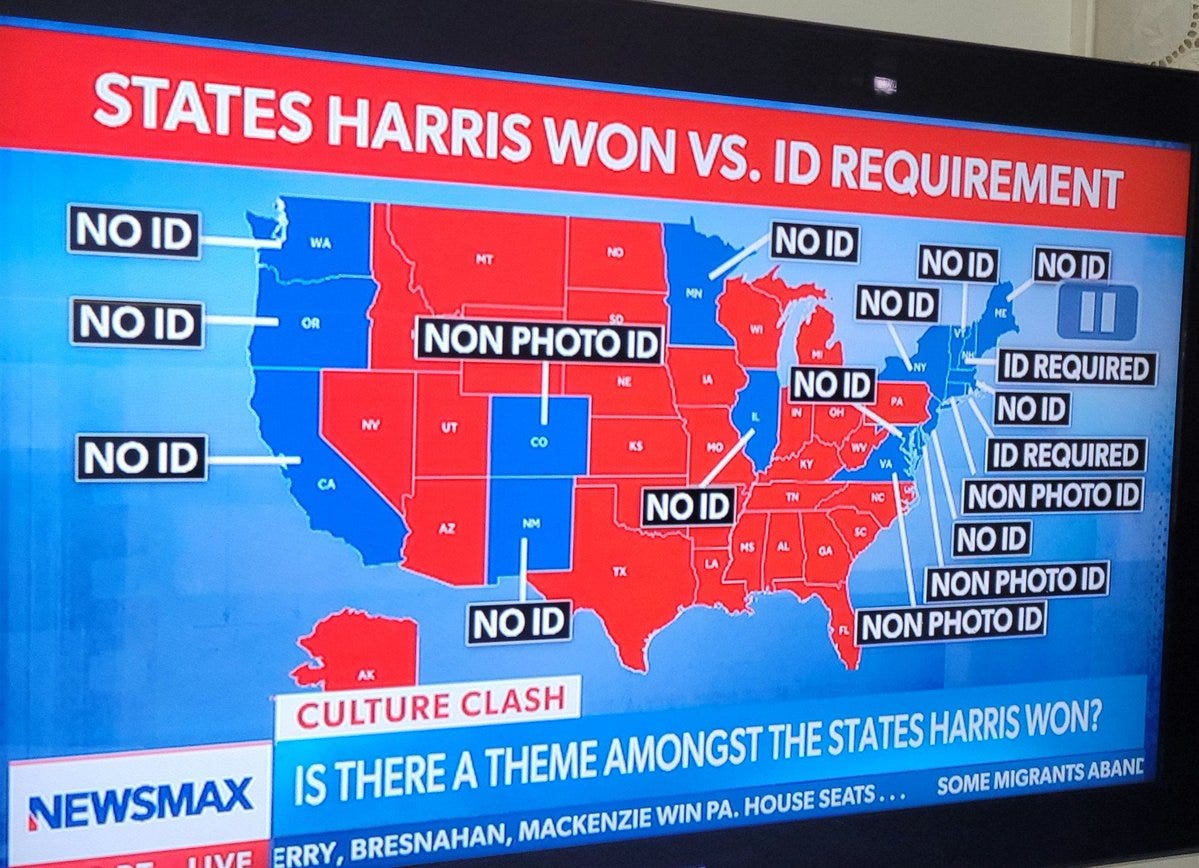
The controversy of voter ID laws was a heated issue in this election. Many states with strict voter identification requirements have come under fire, with claims that they are attempting to disenfranchise certain groups. Some people insist such measures are the only means of truly guaranteeing completely clean elections. While other states like California recently have been under attack by the Republican Party, since you do not need an ID to vote. Many debate that Harris mostly won only in the states where you didn’t need an ID to vote. Especially in California there was a huge discussion, also after Gavin Newsom, the 40th Governor of California, passed a law where it is illegal to show your ID when you vote. For many, this was really a big concern. A lot of voters asked themselves, if the elections were truly fair and square…
How will Bitcoin adapt?
For the first time, Bitcoin and other cryptocurrencies will be overseen by an administration that is eager to promote innovation while simultaneously critical of financial regulations holding U.S. companies back from being competitive. The Trump administration might favour digital assets simply because they are alternatives to the traditional system. Thus, that might create more friendly environments for crypto investors. To be more specific, with changes in regulation that factor in the decentralised nature of Bitcoin, crypto mining infrastructure could be placed back into the U.S. if policy measures become favourable. After Trump won the election, Bitcoin rose from 72K up to 89K. This points to a good time for being invested into Bitcoin.
Trump will return to Power with an improved Agenda…
Trump’s re-election brings an enhanced focus on key areas that could reshape the financial landscape, including tax reductions for businesses, deregulation to increase manufacturing, and a firm stance on geopolitical matters that affect trade, such as the U.S.-China relationship. His refined agenda promises a climate that encourages investment, particularly in industries he sees as central to America’s future, like energy independence, defence, and technology.
Voter Fraud?
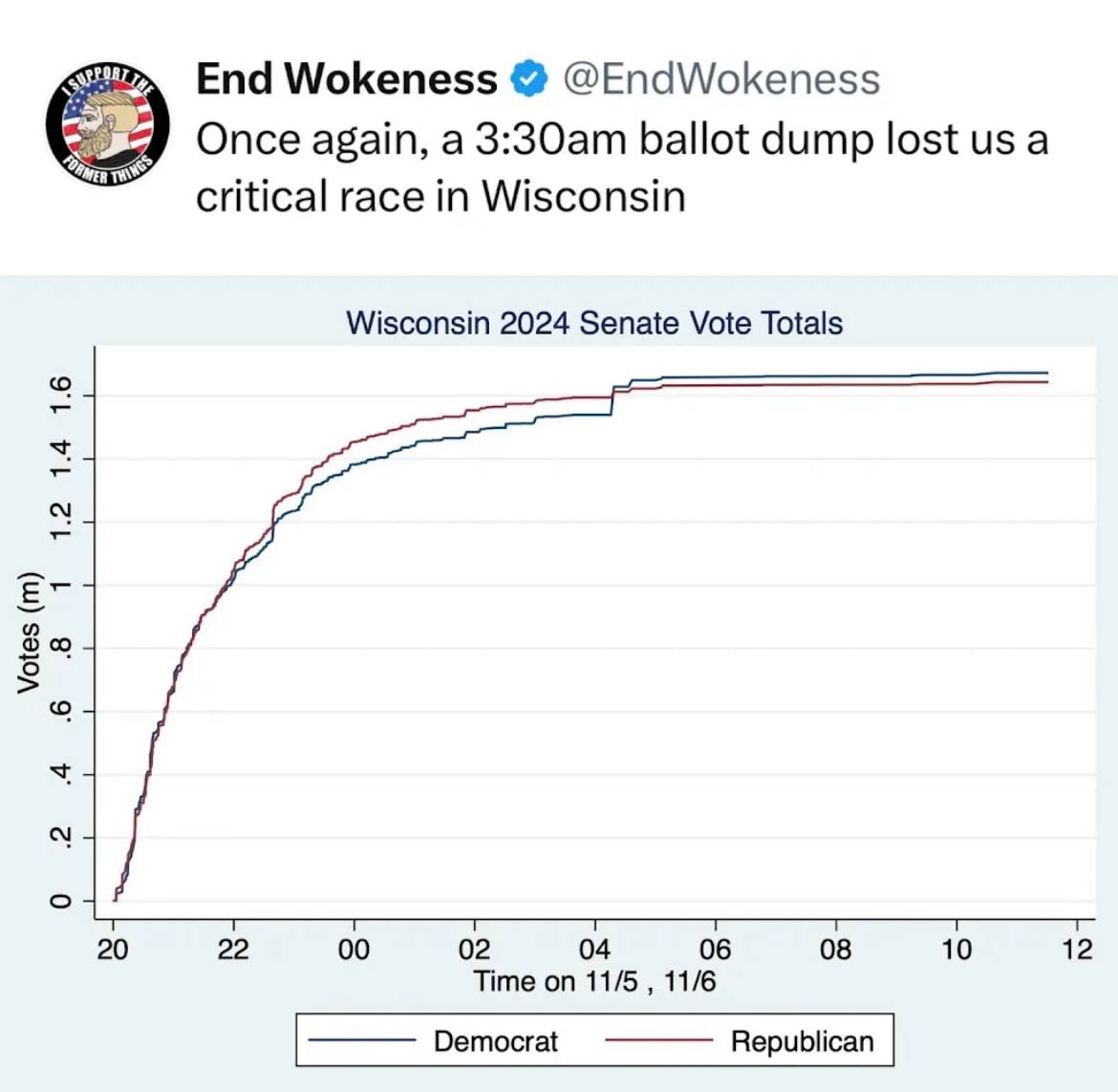
The 2024 election, like past cycles, was not without claims of voter fraud. Some Republican leaders and conservative media outlets raised concerns over irregularities, pointing to alleged issues in densely populated urban centers where Trump’s opponent had strong support. Despite ongoing legal scrutiny and investigations, these allegations have fuelled debates on election security and transparency. Economically, such allegations can lead to periods of uncertainty, particularly in financial markets, as businesses and investors weigh the stability of democratic institutions. Proposals for improved security measures, like expanded voter ID requirements or blockchain-based voting systems, are being discussed. If adopted, these could provide long-term security but also introduce short-term volatility as markets adjust to new federal or state mandates.
THERE IS NO SECOND BEST!
TRUMP 2024!